Table of Contents
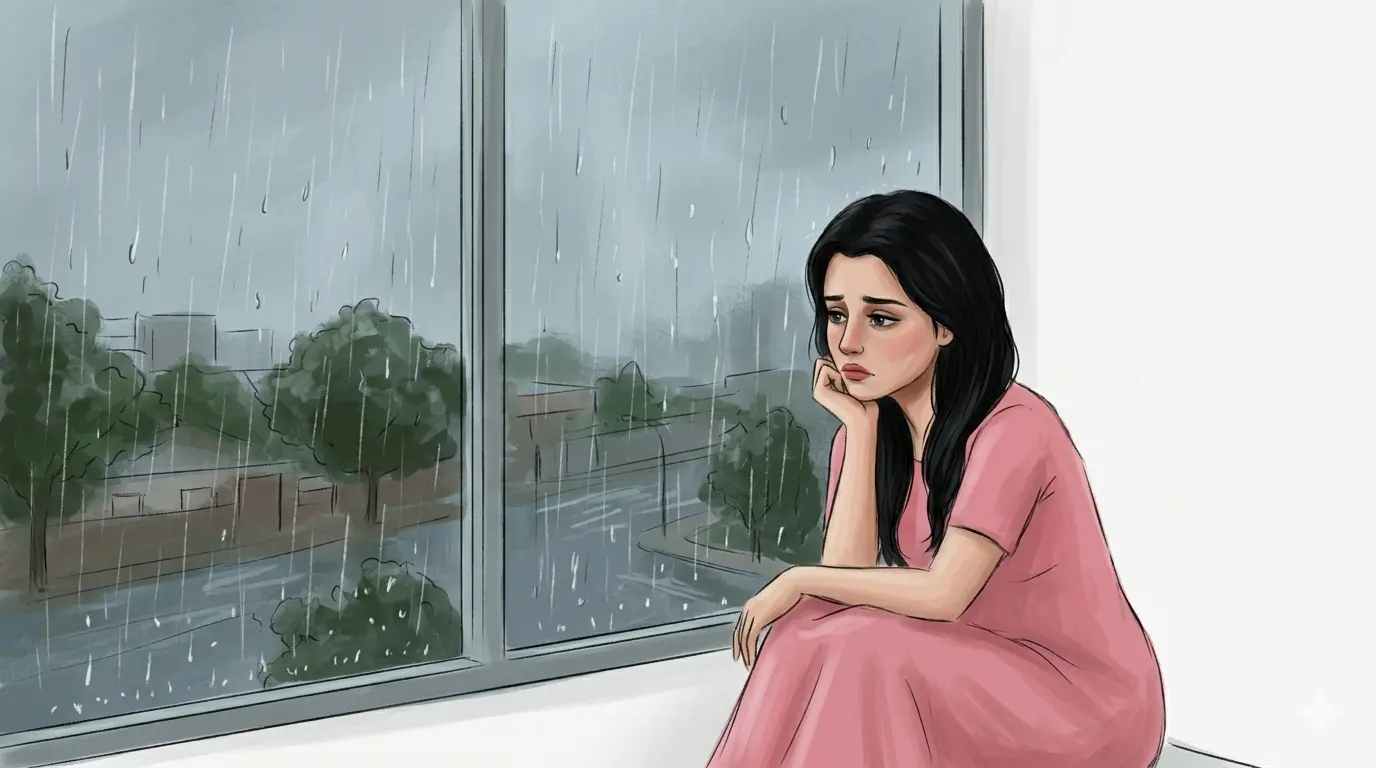
Have you ever found yourself unable to let go of someone who kept hurting you? Maybe you spent months, or even years, caught in a cycle of pain, confusion, hope, and disappointment. Maybe the people around you could not understand why you stayed. Maybe you could not fully understand it yourself. From the outside, it can seem simple: if a relationship is that damaging, just leave. But anyone who has lived through it knows it is rarely that easy.
Perhaps they lied, manipulated, ignored, criticized, or emotionally drained you. And yet, despite the hurt, you still felt deeply attached to them. You kept hoping they would change, apologize, or finally become the person you believed they could be. Some nights you may have cried, questioned yourself, and promised that you would walk away. Then a small apology, a little affection, or a brief moment of kindness would make leaving feel impossible again. If this sounds familiar, you may have experienced trauma bonding.
Trauma bonding is one of the most misunderstood dynamics in relationships. It can keep intelligent, strong, and independent people emotionally attached to someone who repeatedly hurts them. The connection can feel intense and real, even when the relationship itself is unhealthy.
Understanding trauma bonding can be life-changing. It helps explain why toxic relationships can feel addictive, why leaving is so difficult, and why healing often takes longer than people expect. In this guide, we will look at what trauma bonding is, how it develops, the signs to watch for, its effects on mental health, and how to break free and rebuild your sense of self.
What Is Trauma Bonding?

Understanding the Meaning of Trauma Bonding
Trauma bonding is a strong emotional attachment that develops between a person and someone who repeatedly harms, manipulates, abuses, or mistreats them. Trauma bonding often develops gradually. It usually begins with emotional closeness, attention, affection, or intense connection. Over time, unhealthy behaviors appear:
- Criticism
- Manipulation
- Emotional withdrawal
- Controlling behavior
- Blame-shifting
- Repeated cycles of conflict and reconciliation
After periods of hurt, the person may suddenly become caring again. In simple terms, the same person who causes the pain also becomes the person who temporarily relieves it. This creates a confusing emotional dynamic. Instead of moving away from the source of hurt, the victim often becomes more emotionally attached to it.
Psychologists often associate trauma bonding with abusive relationships, but it can also occur in friendships, family relationships, workplaces, and other environments where power imbalances and emotional manipulation exist.
Why Trauma Bonding Feels Like Love
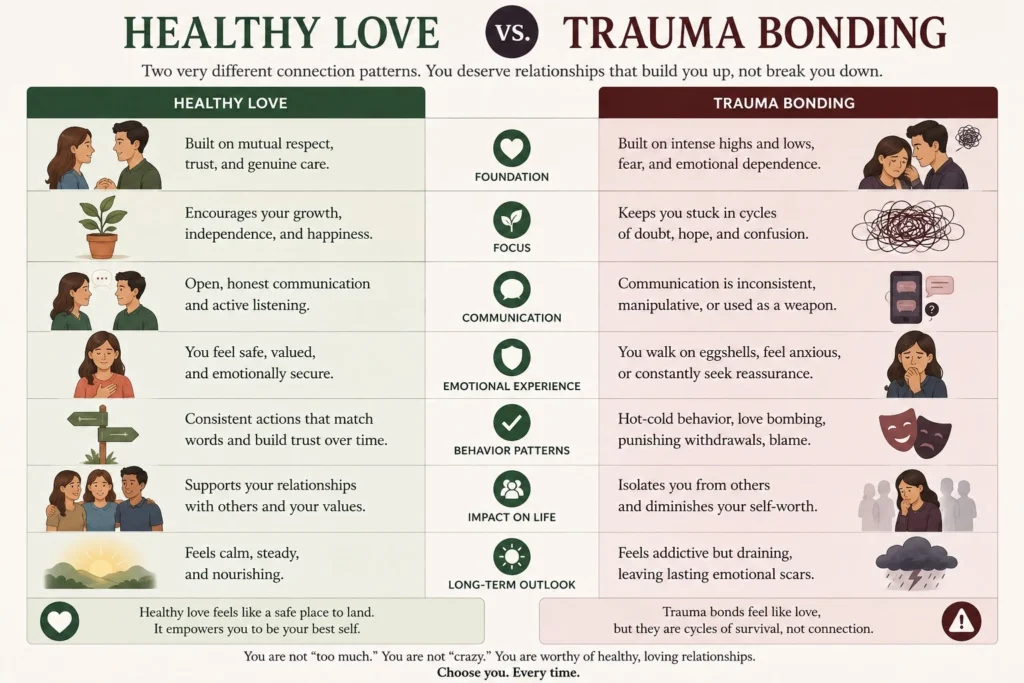
One of the most painful realities of trauma bonding is that it often feels like genuine love. The emotional highs can be intense. After periods of conflict, rejection, or mistreatment, moments of affection can feel incredibly powerful and meaningful.
You may find yourself thinking:
- “They really do care about me.”
- “Nobody understands them like I do.”
- “Things will get better.”
- “I just need to be more patient.”
- “The good times prove the relationship is worth saving.”
These thoughts are common in trauma bonds because the brain begins associating relief from pain with emotional reward. Trauma bonding often keeps people stuck in unhealthy cycles.
How Trauma Bonds Develop
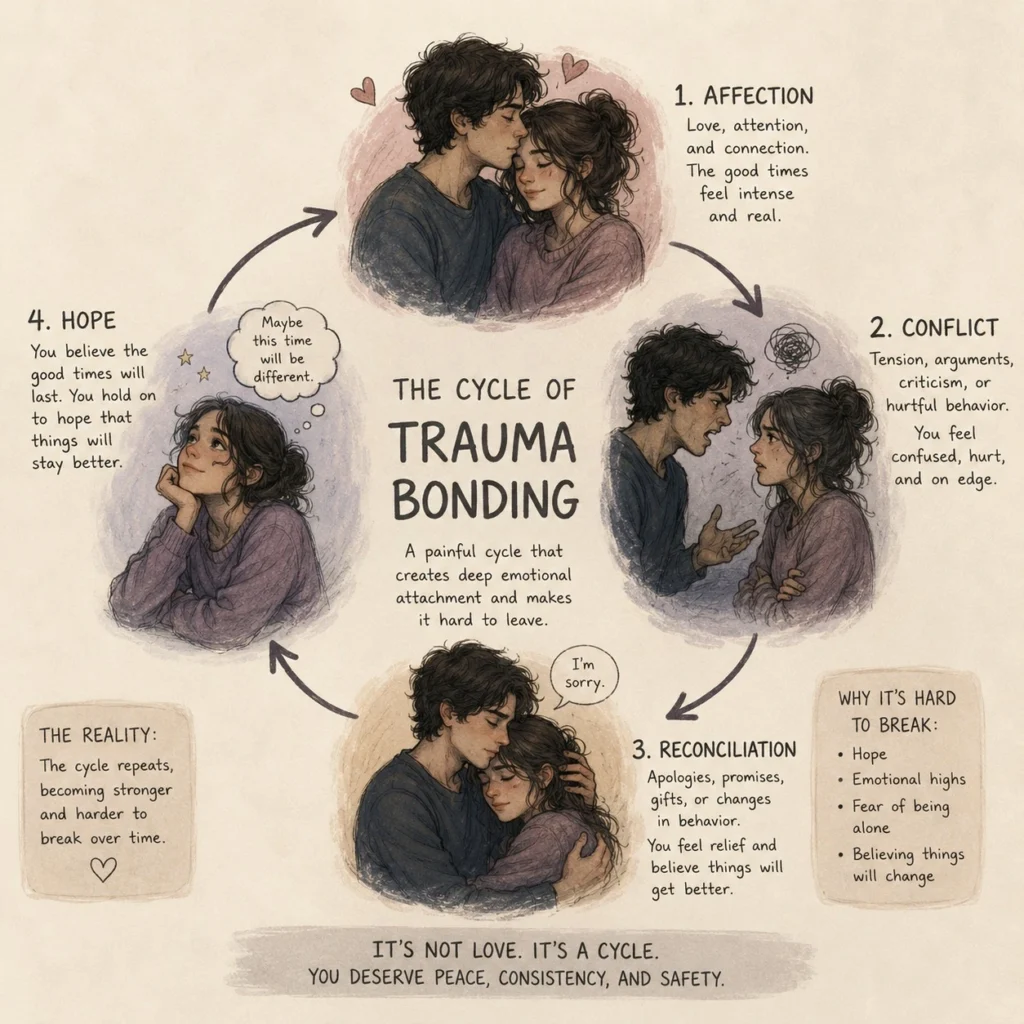
Trauma bonds rarely happen overnight. They usually develop through a repeated pattern that slowly strengthens emotional attachment. What makes trauma bonding particularly powerful is that the relationship does not feel painful all the time. Instead, periods of hurt are often followed by moments of affection, reassurance, kindness, and connection. These alternating experiences create emotional confusion and can make it difficult for a person to recognize what is happening.
As the cycle repeats, the relationship becomes less about genuine connection and more about emotional dependency. The person begins to cling to moments of comfort and affection while tolerating increasing amounts of pain. Understanding how this cycle works is essential because it explains why trauma bonds can be so difficult to break.
Stage 1: Intense Connection
Most trauma bonds begin with a strong emotional connection. In the early stages, the relationship often feels exciting, meaningful, and deeply fulfilling. The other person may shower you with attention, affection, praise, or emotional support. They may make you feel seen, understood, and appreciated in ways that you have never experienced before.
During this phase, trust develops quickly. You begin sharing personal thoughts, emotions, and vulnerabilities. Because the relationship feels safe and rewarding, you naturally become emotionally invested. Many people later describe this stage as feeling like they had finally found someone who truly understood them. This powerful initial connection creates the foundation for the bond that follows. The stronger the attachment becomes during this stage, the more difficult it may be to recognize problems when they begin to emerge.
Stage 2: Hurt, Manipulation, or Mistreatment
As the relationship progresses, unhealthy behaviors gradually start to appear. The change is often subtle rather than sudden. Criticism, emotional withdrawal, manipulation, dishonesty, controlling behavior, or other forms of mistreatment may begin to surface.
What makes this stage particularly confusing is the contrast between the person’s current behavior and the version of them you initially came to know. The warmth, kindness, and affection that once felt consistent may suddenly become unpredictable.
You may find yourself wondering what changed or questioning whether you did something wrong. Instead of recognizing the behavior as a problem, many people focus their energy on trying to restore the relationship to how it felt in the beginning. This creates confusion and emotional distress, making the person even more invested in finding a solution.
For example, someone who once made you feel valued and appreciated may suddenly become distant, critical, or emotionally unavailable. They might ignore your messages, dismiss your feelings, blame you for problems, or make you feel guilty for expressing your needs. Because their behavior changes gradually, you may spend more time trying to understand what went wrong than questioning whether the treatment itself is healthy. Instead of seeing the mistreatment as a warning sign, you may start working harder to regain the affection and connection that existed at the beginning of the relationship.
Stage 3: Reconciliation
After a period of conflict, hurt, or emotional distance, the relationship often enters a reconciliation phase. This is where the cycle becomes especially powerful.
The person may apologize for their actions, express regret, and promise to change, or suddenly become affectionate again. They may offer reassurance, attention, gifts, compliments, or emotional intimacy that had previously been missing.
For a brief period, the relationship feels better. The tension eases, hope returns, and the emotional pain begins to fade. These positive moments can feel incredibly meaningful because they arrive after a period of distress.
As a result, the brain starts associating the person with both pain and relief. The relief feels so rewarding that it strengthens the emotional attachment, even when the overall relationship remains unhealthy.
Stage 4: Hope Returns
Once the relationship appears to improve, hope naturally returns. You begin focusing on the positive moments and convincing yourself that things are finally changing for the better.
You may tell yourself that the difficult period was just a temporary setback or that the relationship is now moving in the right direction. The promises, apologies, and affectionate behavior feel like proof that lasting change is possible. Because people naturally want to believe in the best version of someone they care about, it becomes easy to overlook warning signs. Instead of evaluating the relationship based on consistent patterns of behavior, you focus on the possibility of what it could become.
Unfortunately, the improvements are often temporary. Before long, the harmful behaviors return, and the cycle begins again.
Why the Cycle Becomes So Powerful
With each repetition, the trauma bond tends to grow stronger. The brain becomes conditioned to seek the moments of affection, relief, and emotional closeness that follow periods of pain. Over time, these brief positive experiences can feel incredibly rewarding, making it harder to leave despite the ongoing harm.
Rather than being attached solely to the person, you may become attached to the hope, relief, and emotional comfort that occasionally appear within the relationship. This is one of the reasons trauma bonds can be so difficult to recognize and even more difficult to break.
Understanding this cycle is important because it shifts the focus away from self-blame. Many people stay in trauma-bonded relationships not because they are weak or unaware, but because they have become caught in a powerful pattern of emotional conditioning that gradually reinforces the attachment over time.
Signs of Trauma Bonding
Trauma bonding can be difficult to recognize while you are living through it. The emotional attachment often feels so strong that unhealthy patterns become normalized over time. Many people do not realize they are experiencing trauma bonding because the attachment feels incredibly real.
In fact, the connection often feels incredibly deep, intense, and meaningful. Because strong emotions are involved, many people mistake trauma bonding for love, loyalty, or commitment. The bond can become so powerful that even when someone recognizes they are being hurt, they still find it difficult to walk away. Understanding the warning signs can help you identify whether you are emotionally attached to a person in a way that is causing more harm than good.
1. You Keep Making Excuses for Hurtful Behavior
One of the most common signs of trauma bonding is repeatedly defending and justifying behavior that would normally be considered unacceptable. If a friend described the same treatment, you might immediately recognize it as unhealthy. However, when it happens within your own relationship, you find reasons to justify it.
Instead of holding the other person accountable, you may tell yourself that the person has been through a difficult life, is struggling emotionally, dealing with stress, or simply did not intend to hurt you. Thoughts such as “They didn’t mean it,” “They’re under a lot of pressure,” “They’ll change eventually,” “They’re going through a difficult time,” “Things will get better,” or “Nobody understands them the way I do” become familiar explanations.
2. You Feel Responsible for Fixing Them
Many people experiencing trauma bonding begin to believe that they are responsible for helping, healing, or rescuing the other person. Instead of viewing the relationship as a partnership between two individuals, they take on the role of caretaker, problem-solver, or emotional savior.
You may feel guilty whenever you try to set boundaries or prioritize your own needs. Their struggles become your responsibility, and their happiness starts to feel dependent on your efforts. As this pattern continues, your own emotional needs often take a back seat. The relationship gradually becomes centered on supporting them, understanding them, and helping them change, while your own wellbeing receives less attention. This imbalance can leave you emotionally exhausted and disconnected from your own needs.
3. You Feel Unable to Leave
Many people trapped in a trauma bond recognize that something is wrong yet still feel incapable of ending the relationship. Even when you recognize that the relationship is causing pain, the idea of leaving may feel overwhelming. You might know intellectually that the relationship is unhealthy, yet emotionally you feel unable to walk away.
Friends and family may encourage them to leave, and they may even agree that the relationship is unhealthy. However, when the moment comes to walk away, the emotional attachment feels overwhelming. The idea of leaving can trigger feelings of anxiety, fear, guilt, sadness, or even panic. You may feel emotionally trapped, as though your happiness, identity, or future is somehow tied to the relationship. Even when you know the relationship is causing pain, staying can feel easier than facing the uncertainty of leaving.
This experience can be confusing and frustrating. You may wonder why leaving feels so difficult when the problems are obvious. However, this powerful emotional attachment is one of the defining characteristics of trauma bonding and often explains why people remain in harmful relationships longer than they ever expected.
4. The Good Moments Feel Exceptionally Powerful
In healthy relationships, kindness, affection, and respect are consistent. In trauma-bonded relationships, positive experiences often occur unpredictably and are mixed with periods of pain or emotional distress.
Because positive moments are less frequent, they can feel incredibly meaningful when they happen. A kind message, heartfelt apology, affectionate gesture, or brief period of closeness may feel powerful enough to erase memories of previous hurt. As a result, you may find yourself holding tightly to positive memories while overlooking recurring patterns of harmful behavior. The good moments become proof that the relationship can work, even when the overall pattern continues to cause emotional harm.
5. You Focus More on Their Potential than Their Reality
Another powerful sign of trauma bonding is becoming attached to who someone could be rather than who they consistently are. You may spend a great deal of time thinking about their positive qualities, future promises, or occasional moments of kindness while overlooking recurring patterns of harmful behavior.
Rather than evaluating the relationship based on what is actually happening, you hold onto the hope that things will eventually improve. You believe that if circumstances change, if they heal, or if you try harder, the relationship will become what you always wanted it to be. In this way, hope begins to replace evidence, making it difficult to see the relationship clearly.
6. You Crave Their Approval
In a trauma bond, the other person’s approval often becomes unusually important. Their opinion of you can start to determine how you feel about yourself. A small compliment from them may leave you feeling valued, loved, and hopeful, while a criticism or moment of rejection can completely shatter your confidence.
Because affection is often given inconsistently, you may begin chasing their validation and working harder to earn their approval. As a result, your emotional state becomes heavily dependent on their reactions, making it difficult to maintain a healthy sense of self-worth independent of the relationship.
7. The Relationship Feels Like a Roller Coaster
Healthy relationships tend to provide emotional safety, consistency, and stability. Trauma bonds, on the other hand, are often characterized by dramatic emotional highs and lows. One day you may feel deeply loved, appreciated, and connected. The next day you may feel ignored, criticized, rejected, or emotionally devastated.
These constant shifts create an emotional roller coaster that can become addictive. The intense moments of affection feel even more powerful because they follow periods of pain or uncertainty. Over time, the unpredictability itself can strengthen the attachment, making the relationship feel exciting even when it is emotionally exhausting.
8. You Constantly Doubt Yourself
Trauma bonding can gradually erode your trust in your own thoughts, feelings, and perceptions. After repeated criticism, manipulation, blame-shifting, or emotional invalidation, you may begin questioning whether your concerns are even legitimate.
You might frequently think, “Maybe I’m overreacting,” “Maybe it’s my fault,” or “Maybe I’m the problem.” Instead of trusting your instincts, you start second-guessing yourself and looking to the other person for reassurance about what is real. This self-doubt can make it even harder to recognize unhealthy patterns and take action to protect yourself, allowing the trauma bond to grow stronger over time.
9. You Feel Relief When the Mistreatment Stops
One of the clearest indicators of trauma bonding is feeling immense relief whenever the hurt temporarily ends. Instead of expecting kindness, respect, and emotional safety as normal parts of a relationship, you become grateful simply because the conflict, criticism, or mistreatment has stopped for a while.
After a painful argument, emotional withdrawal, or hurtful incident, even a small act of affection can feel incredibly meaningful. This temporary relief creates a sense of comfort and reinforces the emotional attachment. Unfortunately, it can also keep the cycle going, as the moments of relief make it easier to tolerate future mistreatment.
Note: Recognizing these signs does not automatically mean a relationship is trauma bonded. However, when several of these patterns appear together, they may indicate an unhealthy attachment that deserves careful attention. Recognizing these signs can be uncomfortable, but awareness is often the first step toward understanding a relationship more clearly. The more honestly you evaluate these patterns, the easier it becomes to determine whether the connection is built on genuine mutual care or sustained by a cycle of emotional dependency.
The Effects of Trauma Bonding
1. Emotional Consequences
Trauma bonding can leave deep emotional wounds. Many people experience:
- Anxiety
- Chronic stress
- Depression
- Emotional exhaustion
- Low self-esteem
- Feelings of shame
- Confusion and self-doubt
The longer the cycle continues, the more difficult it can become to recognize your own needs and emotions.
2. Impact on Identity
One of the most overlooked effects of trauma bonding is the gradual loss of self. Many people become so focused on maintaining the relationship that they lose touch with who they are outside of it.
- You may stop pursuing hobbies.
- You may distance yourself from friends.
- You may abandon personal goals.
Eventually, your identity becomes tied to the relationship itself.
3. Long-Term Relationship Difficulties
Trauma bonds can influence future relationships as well. After leaving, some people struggle with trust. Others confuse emotional intensity with genuine intimacy. Some find healthy relationships unfamiliar because they lack the dramatic highs and lows they became accustomed to.
How to Break Free from Trauma Bonding

Breaking free from a trauma bond is rarely as simple as deciding to leave. If it were, far fewer people would find themselves trapped in unhealthy relationships. Trauma bonds are powerful because they are built on emotional dependency, hope, and repeated cycles of pain followed by relief. Even when someone recognizes that a relationship is harmful, breaking the attachment can feel incredibly difficult.
The good news is that recovery is possible. With awareness, support, and patience, it is possible to gradually loosen the bond and rebuild a healthier relationship with yourself. While every healing journey is different, the following steps can help you begin moving forward.
1. Recognize the Pattern
The first step toward healing is recognizing the pattern for what it is. Many people caught in trauma bonds focus on individual moments rather than the overall relationship dynamic. They remember the affectionate conversations, heartfelt apologies, and brief periods when everything felt good while overlooking the recurring cycle of hurt and disappointment.
Instead of focusing only on isolated positive experiences, take a step back and examine the bigger picture. Ask yourself important questions such as:
- How often does the harmful behavior occur?
- How many times have promises been made but not kept?
- If a close friend described this relationship to me, what advice would I give them?
Looking at the relationship as a whole can help you see patterns that may have been hidden by emotional attachment. Awareness alone may not break the bond, but it can significantly weaken its hold over time.
2. Keep a Reality Journal
One practical way to challenge a trauma bond is to keep a reality journal. After disagreements, conflicts, or emotionally difficult interactions, write down exactly what happened, how you felt, what was said, and how the situation was resolved. Focus on facts rather than explanations or excuses.
This practice can be surprisingly powerful because trauma bonds often distort memory. Over time, many people begin remembering the moments of affection, apologies, and connection more clearly than the patterns of hurt that came before them. As a result, they may underestimate how often the harmful behavior occurs.
A reality journal creates an accurate record of the relationship over time. When doubt, loneliness, or nostalgia appear, you can look back at your notes and see the full picture rather than only the highlights. This can help reduce emotional confusion, strengthen self-awareness, and make it easier to evaluate the relationship based on consistent patterns rather than temporary moments of relief or affection.
3. Stop Romanticizing the Highs
One reason trauma bonds are so difficult to leave is that people often become attached to the relationship’s best moments rather than its overall reality. They hold onto memories of affection, kindness, or connection and believe those moments represent the relationship’s true potential.
However, healthy relationships are defined by consistent behavior, not occasional highs. A few good days cannot erase months of emotional pain, manipulation, or mistreatment.
As you evaluate the relationship, try focusing on what happens consistently rather than what happens occasionally. It can be helpful to remember a simple truth: potential is not reality, promises are not change, and words are not actions. Lasting change is demonstrated through repeated behavior over time, not temporary moments of affection following conflict.
4. Rebuild Your Support System
Trauma bonds often become stronger when a person feels isolated. Whether intentionally or unintentionally, unhealthy relationships can create distance between individuals and the people who care about them. As a result, the relationship begins to feel like the primary source of emotional support, making it even harder to leave.
Reconnecting with trusted people can help break this cycle. Reach out to friends, family members, mentors, support groups, or mental health professionals who can offer guidance and perspective. Talking openly about your experiences may help you see the relationship more clearly and remind you that you do not have to navigate recovery alone.
Healthy relationships provide something trauma bonds cannot: consistency, respect, and genuine emotional safety. The more supportive connections you build, the easier it becomes to reduce your dependence on an unhealthy attachment.
5. Practice Self-Compassion
Many people who leave trauma-bonded relationships spend a great deal of time blaming themselves. They wonder why they stayed, why they ignored warning signs, or why they kept giving the other person more chances.
Self-blame may feel natural, but it rarely supports healing. Trauma bonding is not a reflection of weakness, poor judgment, or a lack of intelligence. It is a psychological response to a complex cycle of attachment, intermittent reinforcement, and emotional conditioning.
Instead of criticizing yourself for what happened, try treating yourself with the same kindness you would offer a close friend facing the same situation. Healing becomes much easier when self-judgment is replaced with understanding, patience, and compassion .
6. Give Yourself Time
One of the most challenging parts of recovery is accepting that healing does not happen overnight. Even after leaving the relationship, you may continue thinking about the person. You may miss them, question your decision, or feel tempted to reconnect.
These feelings can be confusing, especially when you know the relationship was unhealthy. However, experiencing emotional withdrawal does not mean you made the wrong choice. It simply means your mind and body are adjusting to life outside a familiar emotional cycle.
Recovery often happens gradually. Some days will feel easier than others, and setbacks may occur along the way. What matters most is continuing to move forward, even when progress feels slow. Breaking free from a trauma bond is not a single decision; it is a process of reclaiming your sense of self, rebuilding your confidence, and learning to choose relationships that offer genuine respect, consistency, and emotional safety. With time and support, the bond can lose its power, making space for healthier connections and a more peaceful future.
Conclusion
Trauma bonding is one of the most confusing experiences a person can go through because it creates an emotional connection that survives even in the presence of repeated pain. If you’ve ever wondered why you stayed, why you kept hoping, or why leaving felt impossible, the answer may not be weakness, lack of intelligence, or poor judgment. It is the powerful psychological dynamics of trauma bonding.
The good news is that trauma bonds can be broken. Awareness can replace confusion. Understanding can replace self-blame. And healing can replace the cycle that once kept you stuck.
If parts of this article felt uncomfortably familiar, take a moment to reflect on your own experiences. Sometimes the first step toward freedom is simply recognizing that what you’re feeling has a name and that you’re not alone in experiencing it. The strongest sign of healing is not when you stop missing the person. It is when you finally stop abandoning yourself for them.
FAQs
1. Is trauma bonding the same as love?
No. Trauma bonding is an emotional attachment formed through cycles of harm and reward. Healthy love is built on trust, respect, safety, and consistency.
2. What are the signs of trauma bonding?
Common signs include making excuses for harmful behavior, feeling responsible for fixing the other person, craving their approval, doubting yourself, and struggling to leave the relationship even when you recognize it is unhealthy.
3. Can trauma bonding happen without physical abuse?
Yes. Trauma bonding can develop through emotional abuse, manipulation, control, gaslighting, intimidation, or other forms of psychological mistreatment.
4. Why do trauma bonds feel so strong?
The cycle of pain and relief creates powerful emotional and biological responses (like spikes in dopamine and cortisol) that can make the attachment feel intense and incredibly difficult to break.
5. How long does it take to recover from trauma bonding?
Recovery varies from person to person. Some people begin healing within months, while others need longer, especially if the relationship lasted for years.
6. Can therapy help with trauma bonding?
Yes. Therapy can play a massive role in recovery. It helps individuals recognize unhealthy relationship patterns, rebuild self-esteem, process emotional wounds, and develop healthier attachment patterns.
7. Can a trauma-bonded relationship become healthy?
In rare cases, meaningful change is possible if harmful behaviors stop completely, accountability is taken, and both individuals commit to long-term healthy change. However, many trauma-bonded relationships continue repeating the same destructive cycle, which is why careful evaluation is important.